Behind the Unmarked Door: Inside Greater Manchester's Delivery-Only Kitchen Jobs
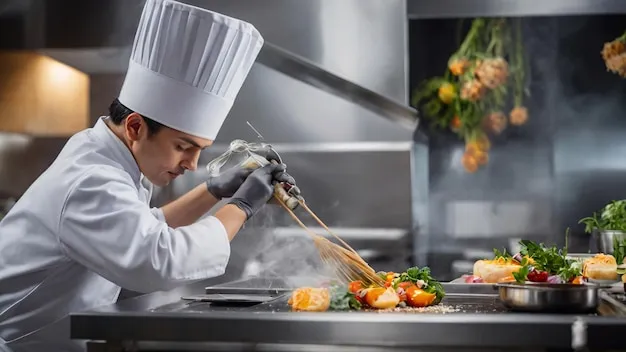
Photo: chef preparing takeaway orders in industrial commercial kitchen unit, via img.freepik.com
Walk past a certain row of units on an industrial estate in Trafford Park on a Friday at seven and the smell gives it away: chip oil, charred chicken, a bit of smoke. What you won't see is a dining room, a bar or anyone waiting for a table. Behind those roller shutters, six brands are running out of one kitchen, each with its own menu, its own packaging and its own Deliveroo page — and, increasingly, its own chef jobs.
Dark kitchens aren't new to Greater Manchester. They've been part of the food map for the best part of a decade, clustered around Salford, Openshaw, Ancoats, Stockport and the ring-road estates where a unit is cheap and a van can be at a city-centre door in twelve minutes. What has changed is the quality of the work on offer. A few years ago, delivery-only meant either a side project for a restaurant group or a bloke with a fryer and a dream. In 2026 it's a proper employment market, with head chefs on salaries, structured rotas and — in the better operations — actual training budgets.
Who is actually hiring
Three types of employer dominate the delivery-only scene here, and they are not interchangeable.
The first is the multi-brand operator: one unit, four or five virtual brands, one team. You might be cooking smash burgers, katsu curry and loaded fries in the same shift. These roles suit chefs who like variety and can keep a dozen specs in their head at once. They're also the most likely to be run on tight margins, so ask hard questions about staffing levels before you sign anything.
The second is the satellite site. Established restaurant groups around the Northern Quarter, Ancoats and Didsbury have worked out that a second kitchen with no covers can extend their reach into Wigan, Rochdale or Macclesfield without a second restaurant. These are generally the strongest jobs in the sector: proper contracts, group-wide training, a head chef who has come up through the parent site, and the chance to move back into a full restaurant later.
The third is the franchise model, where a national delivery brand licenses its menu to a local operator. The menu is fixed, the specs are fixed, and your job is consistency at volume. Boring? Sometimes. Predictable, well-documented and a decent route back into work after a break? Also yes.
What the money looks like
Pay in dark kitchens has caught up with the restaurant sector, and in some cases passed it. Typical going rates in Greater Manchester right now sit around £13 to £15 an hour for an experienced chef de partie, £30,000 to £34,000 for a sous, and £36,000 to £44,000 for a head chef depending on volume — a unit pushing 400 orders on a Saturday pays differently to one doing 90.
Where delivery kitchens genuinely win is the rota. No split shifts, because there's no lunch-to-dinner gap to fill with a nap. No front of house to manage, no complaints about a table by the toilet, no last-minute walk-ins at 9:40pm. Prep-heavy mornings mean you can often finish before the city centre is getting busy, and several operators now run four-day weeks as standard because they can plan volume more accurately than a restaurant can.
That said, the peaks are real peaks. Friday and Saturday between six and nine is relentless, and there's nobody sending a dish back — you simply get a one-star review instead, three days later, with no context.
The trade-offs nobody mentions in the ad
Repetition is the big one. A tight virtual-brand menu cooked 200 times a night is a test of discipline, not creativity — though if you're the one writing the specials or developing the new brand, there's more freedom than most restaurants can offer. Kitchens are often quiet, functional and slightly soulless. And you'll spend more of your time on packaging, labelling and temperature checks than you ever did on plating.
How to spot a cowboy operation
The sector's reputation problem comes from a minority of operators, and they're not hard to identify if you know what to look for.
- The hygiene rating. Check the Food Standards Agency's online register before you interview. A rating of 3 or below in a delivery-only unit is a warning sign, not a paperwork issue.
- Who employs you. If nobody can tell you the company name, ask for it in writing. Look it up on Companies House — a one-month-old company with no accounts is worth a second thought.
- Cash in hand or 'self-employed for tax reasons'. Both shift risk onto you and neither is a legitimate way to staff a kitchen.
- Unpaid trials beyond a normal shift. A paid trial shift is standard. A twelve-hour unpaid 'audition' is not.
- No allergen matrix. In a kitchen running six brands, an out-of-date allergen folder is a genuine safety issue, not a housekeeping one.
- Shared equipment with no boundaries. Ask who owns the fryers, the fridges and the stock. 'Kitchen within a kitchen' arrangements can get messy fast.
- Churn. Ask how many chefs have started in the last six months. Honest managers answer the question.
Questions worth asking back
What's the split between prep and service hours? Who writes the specs, and how often do they change? Is the trial shift paid, and at what rate? What's the gas and extraction service schedule? And — the one that sorts the serious operators from the rest — what happened to the last head chef?
A good dark kitchen is a stable, well-paid, genuinely sane place to cook. A bad one is a hot unit with a Deliveroo tablet and no plan. The trick is knowing which door you're walking through.